
In 1996 a forest fire decimated an area in central Oregon that was roughly 5 miles wide by 3 miles long. Much of the fire’s southern advance was stopped by the immense shoreline of Waldo Lake – a glacially carved body of water that is 10-square miles in size!
The titanic forces of fire and ice have affected this magnificent landscape in dramatic and beautiful ways; all of which are best experienced from the trail.
Here are some photos from a two-day, 8-mile backpacking trip along Waldo Lake’s north shore and deep into the burn zone of the Ringdon Lakes area.
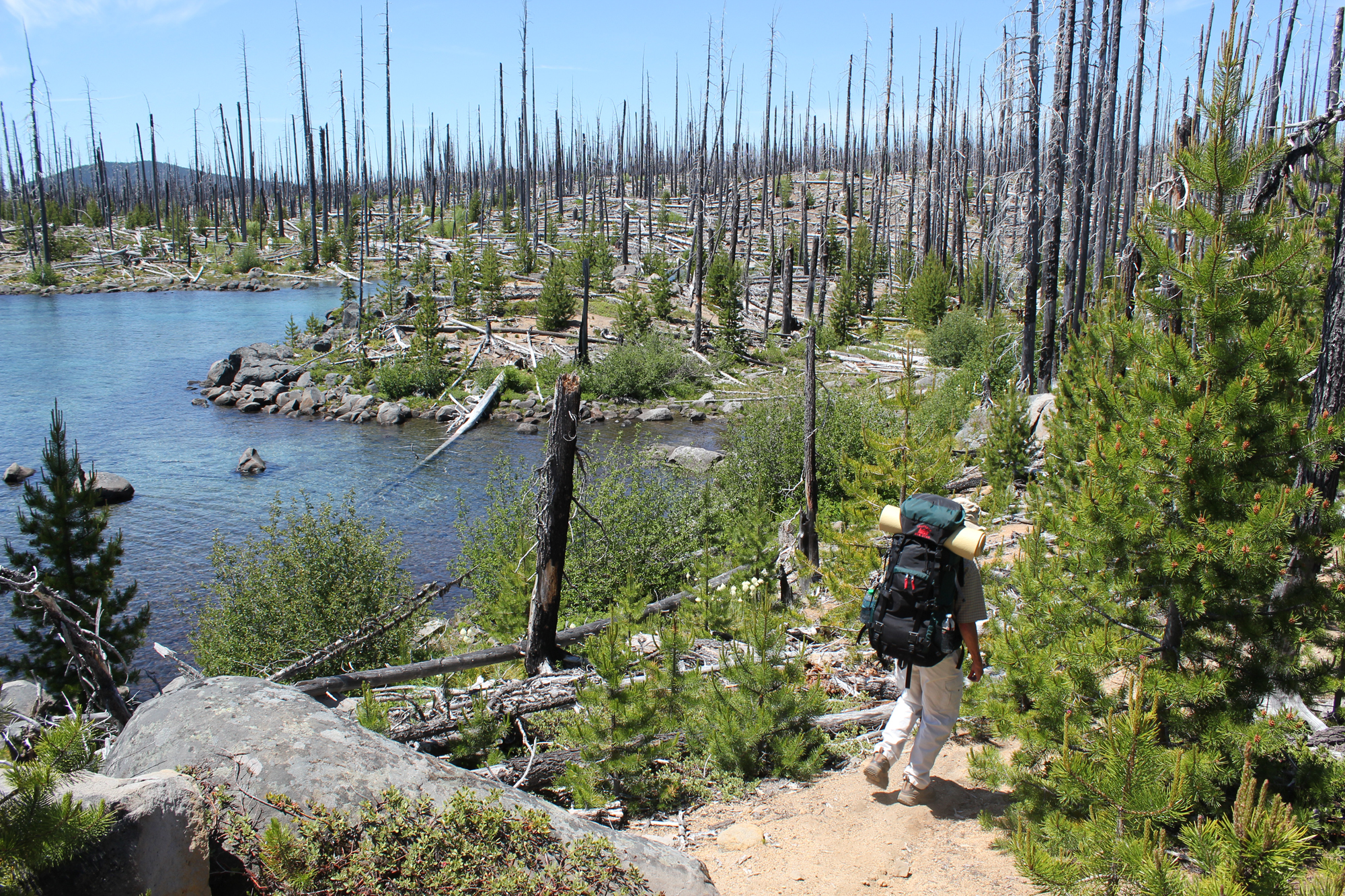
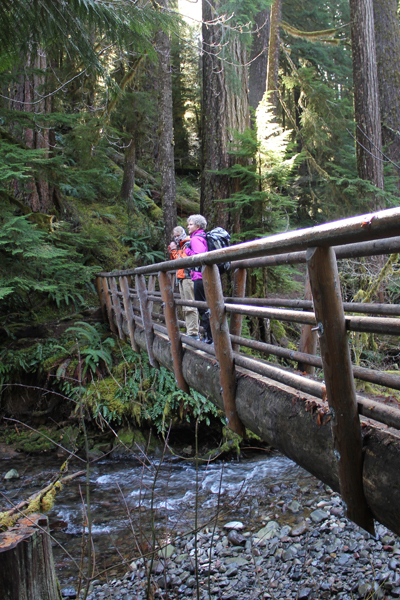
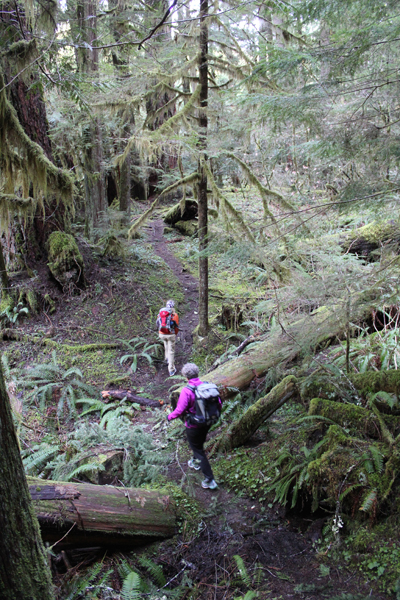
Hiking along Waldo Lake’s north shore. Waldo Lake is considered to have some of the purest water in the world. The lake was named after Judge John Breckenridge Waldo, who is considered to be the “John Muir of Oregon†for his work helping to conserve large tracks of forests in the Cascades.
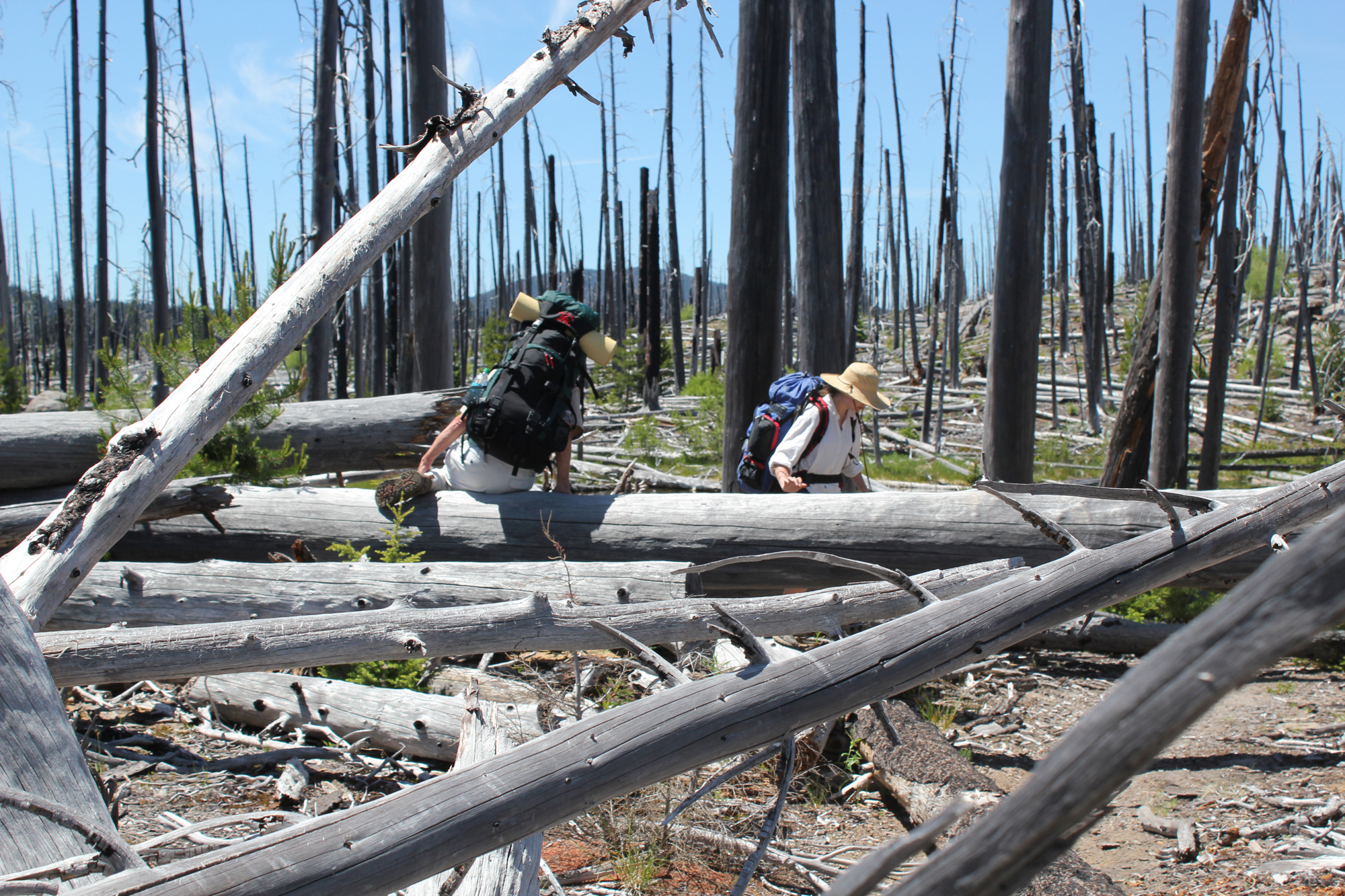
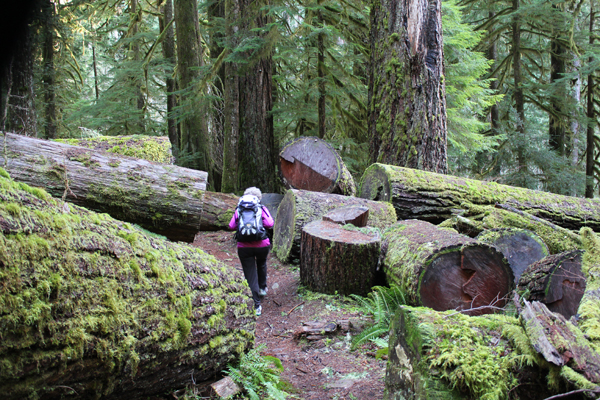
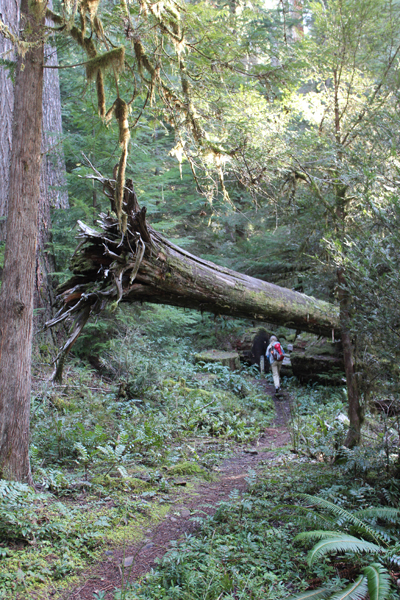
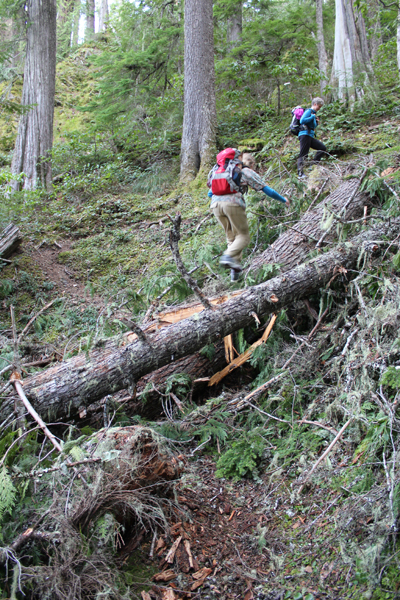
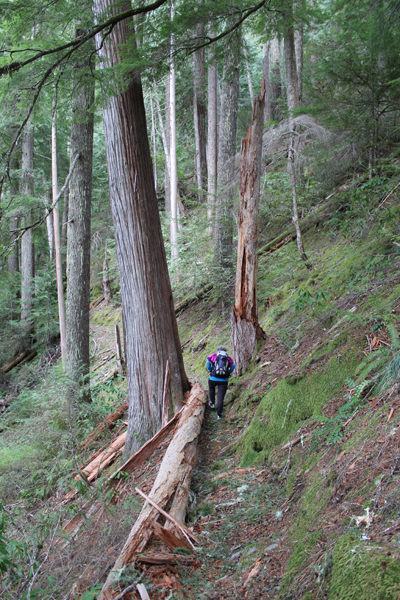
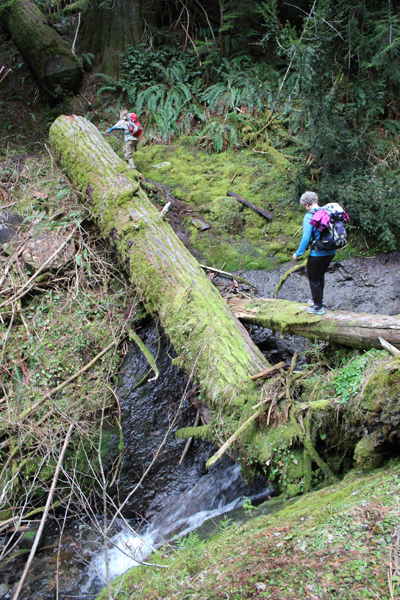
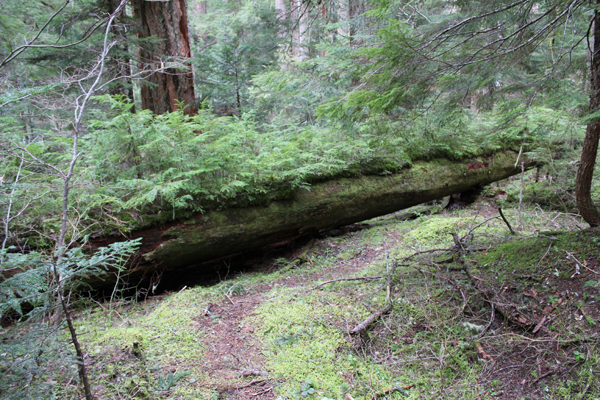
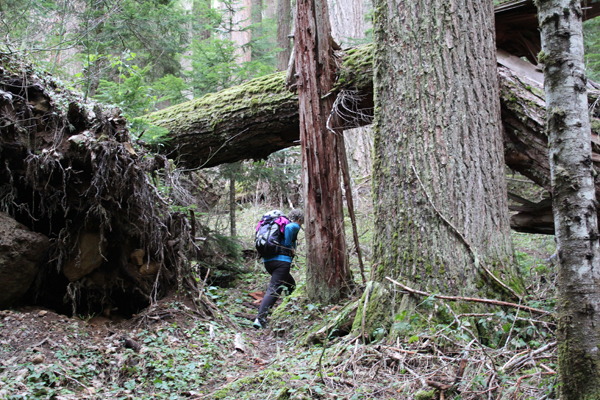
Scampering over and under the “blowdown;†these are trees that have been blown down by the wind. In this case, the blowdown are the trees that burned in the 1996 fire.
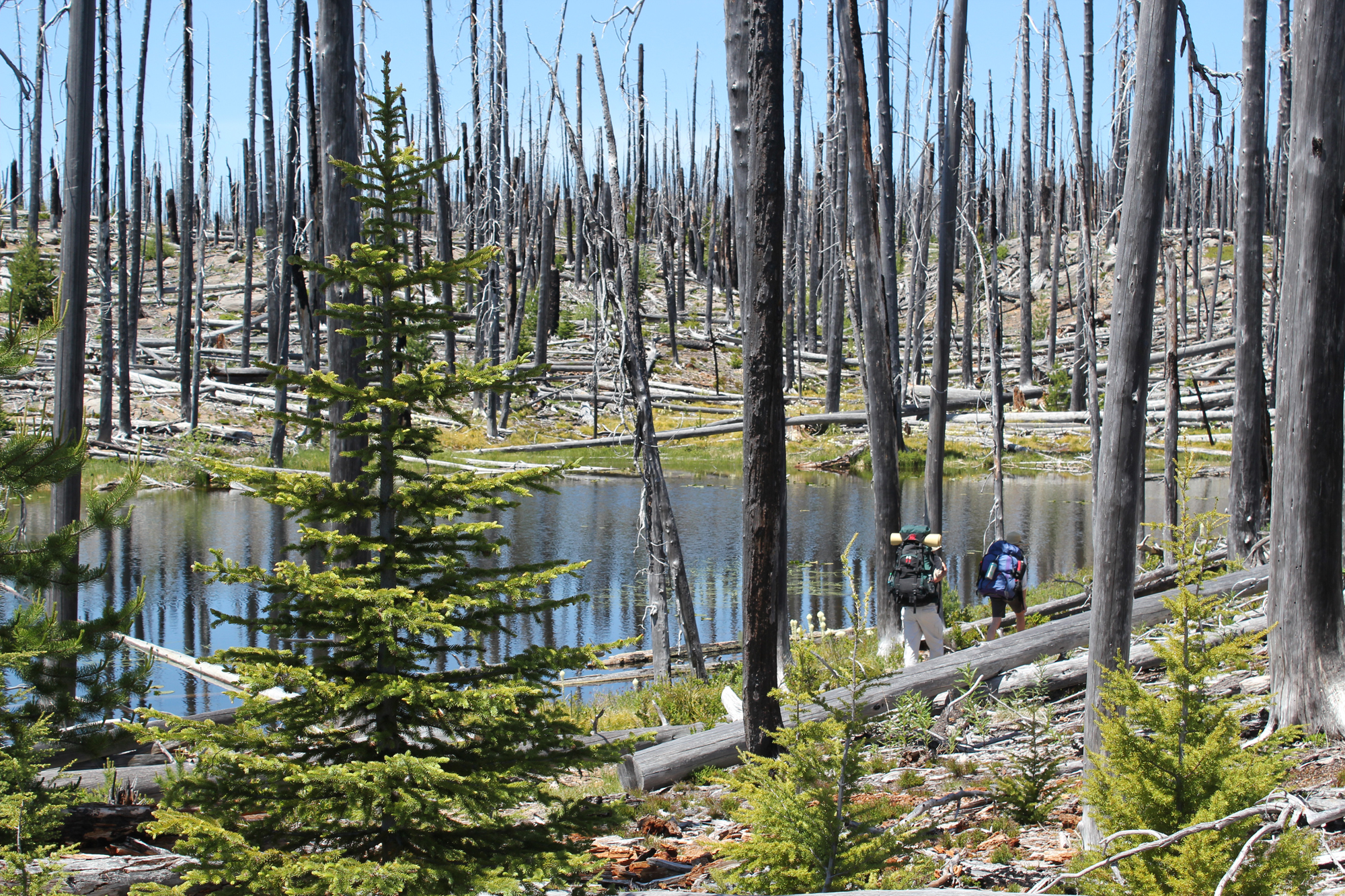
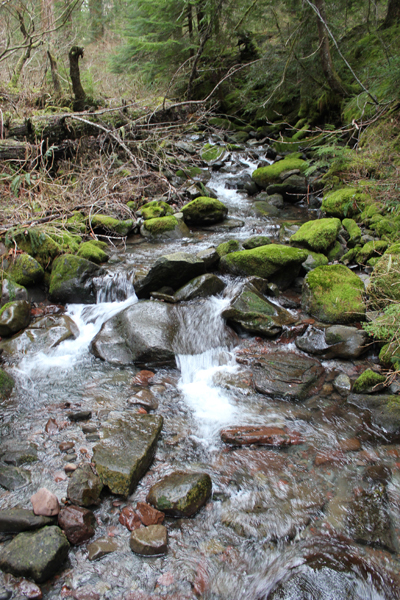
Passing one of the many ponds that dot the northern shore of Waldo Lake.
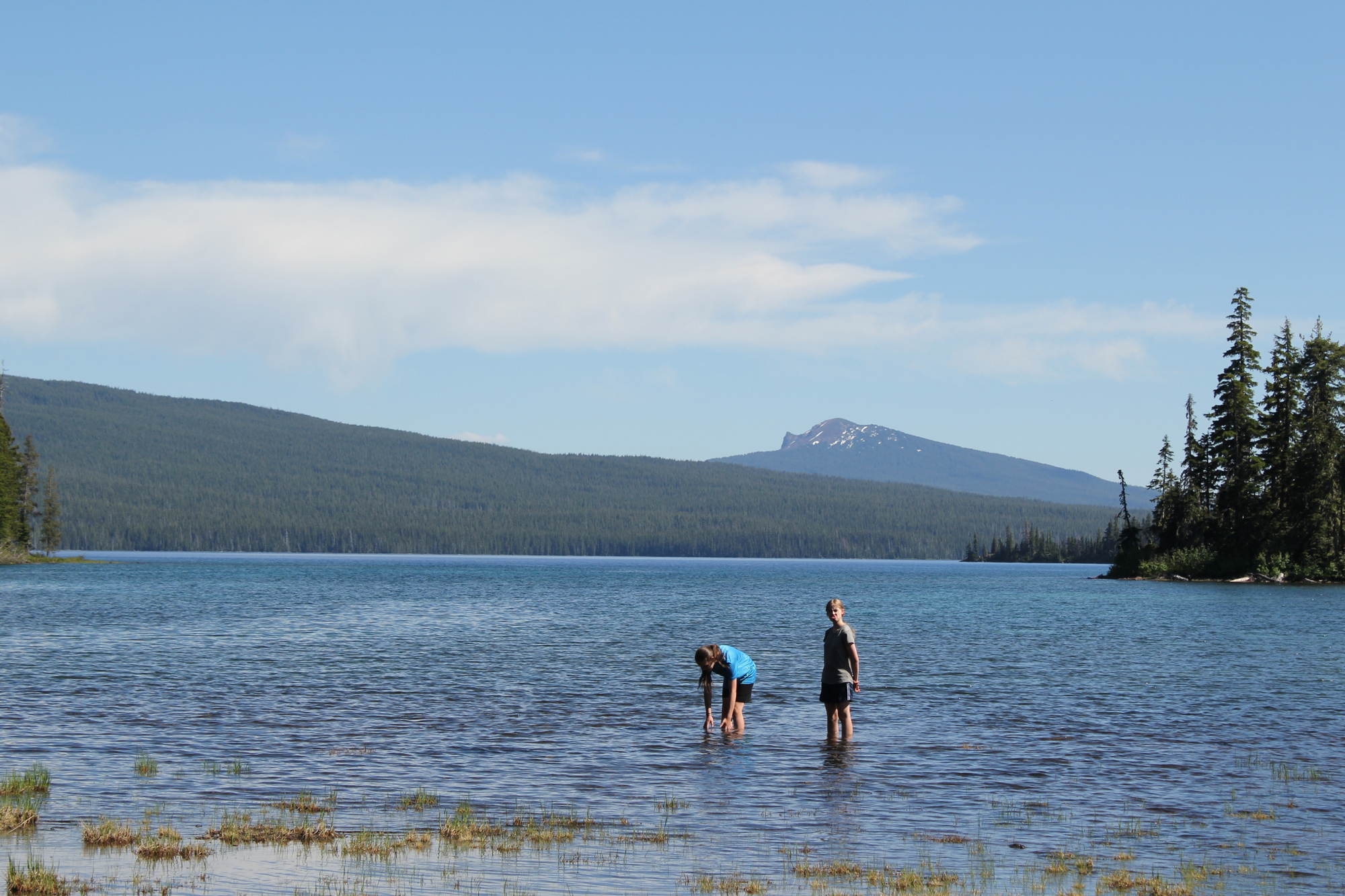
We exited the burn zone and made camp. Shown are several youthful members of the group seen enjoying the shallow and cool waters nearby.
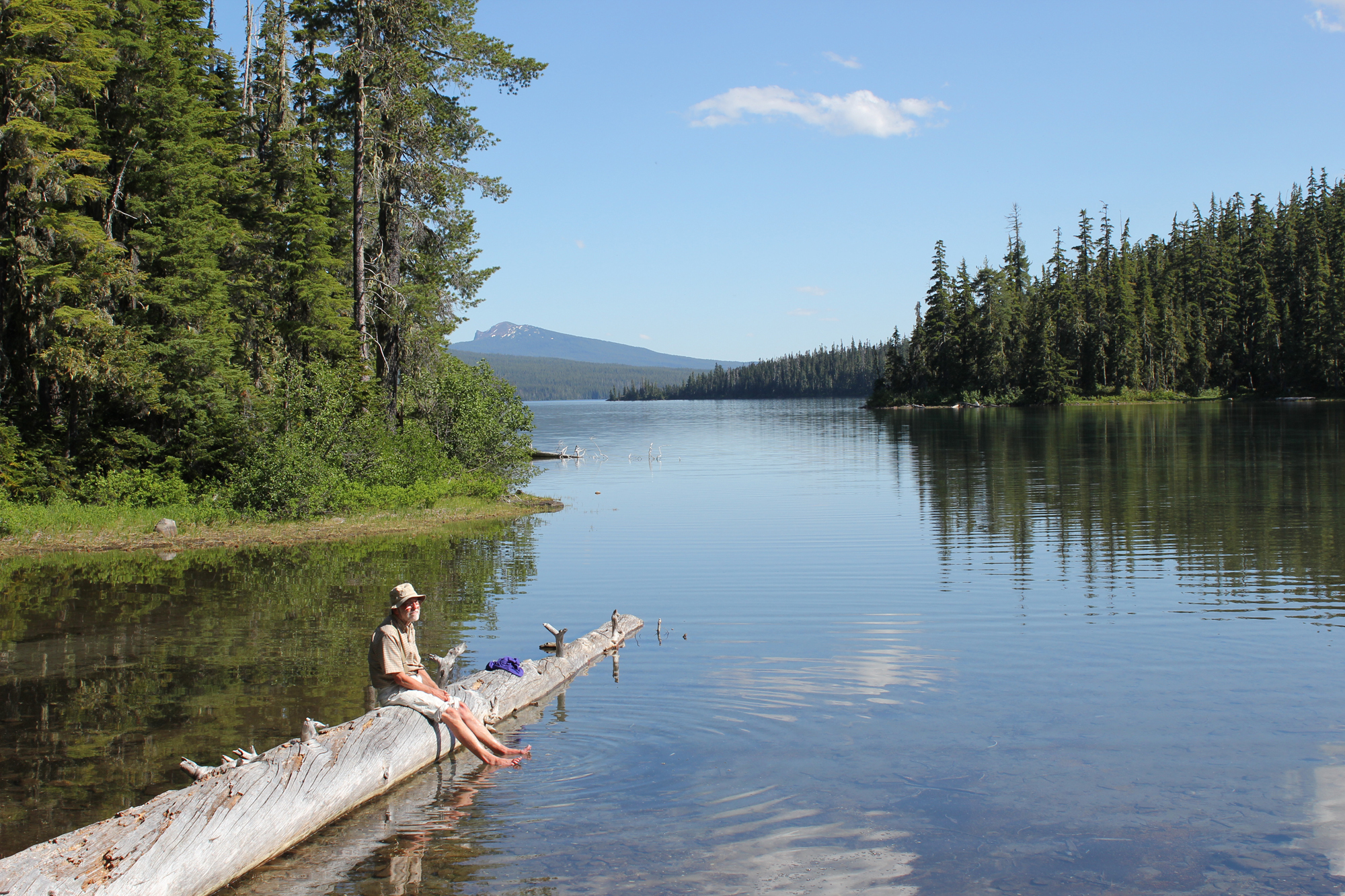
If you think you’re too old for backpacking? Just look at Jack, at 70 years old he celebrates life by getting outside.
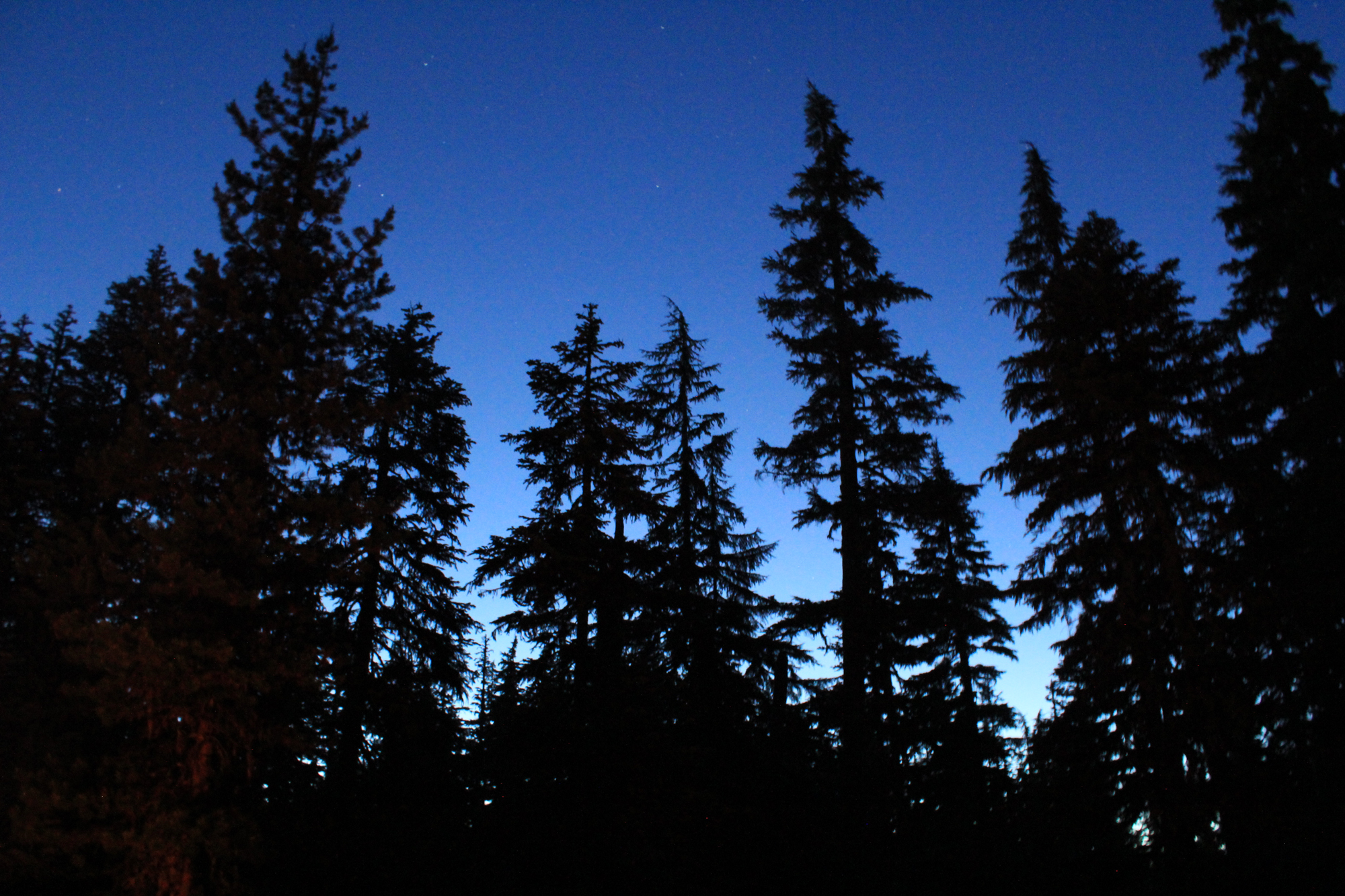
A view of the evening sky as seen from our campsite. That night we heard only nature’s sounds…which included the buzz of mosquitoes.
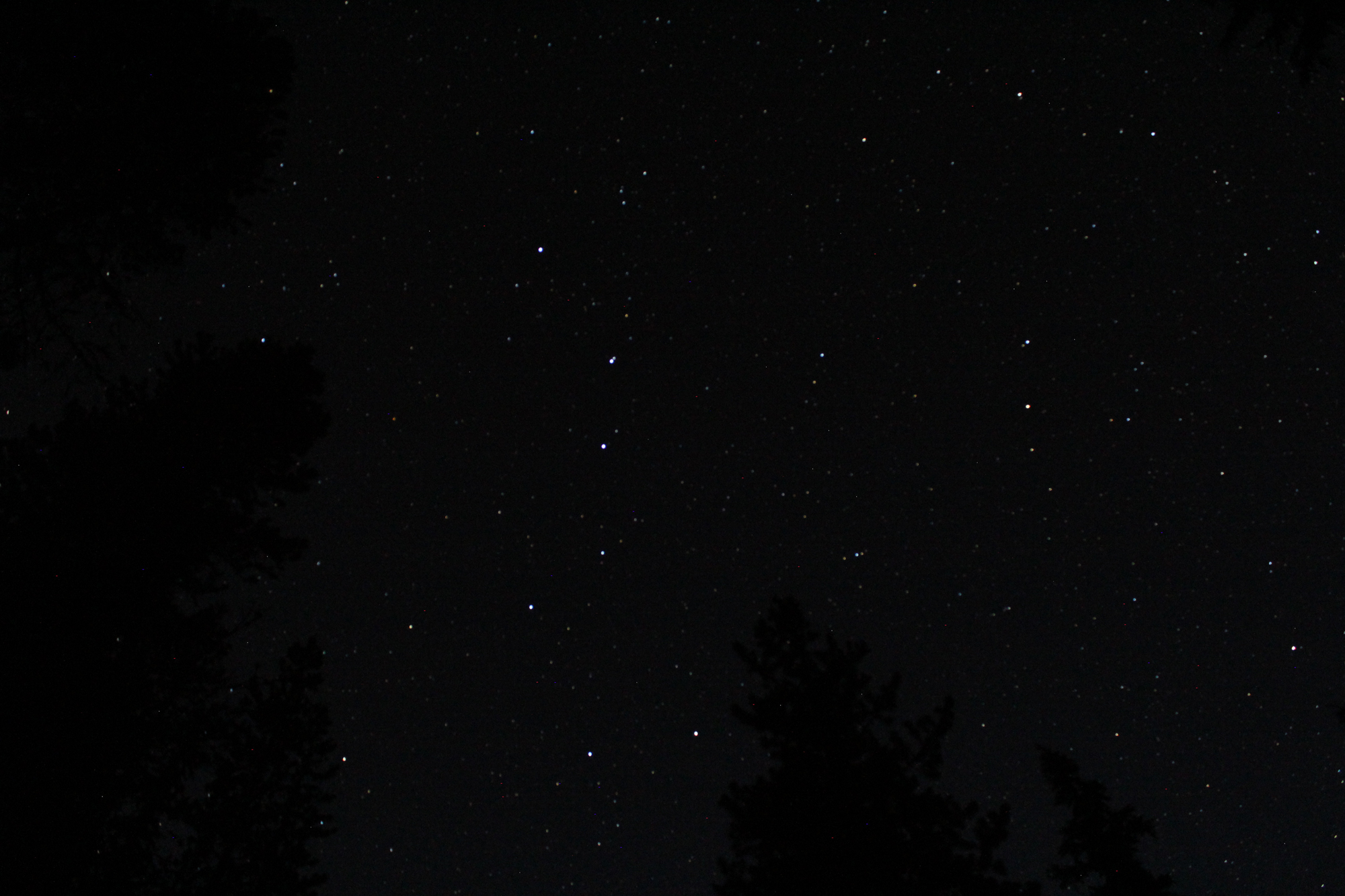
The night sky was dark on this moonless night. Note the prominent stars of the Big Dipper, in the right of the image, is Polaris (the North Star) and the Little Dipper. To locate Polaris, all you have to do is to find the Big Dipper pointer stars, which are located at the outer part of the Big Dipper’s bowl (seen at the bottom of the image). Draw a line from these and go about 5 times the distance to Polaris.
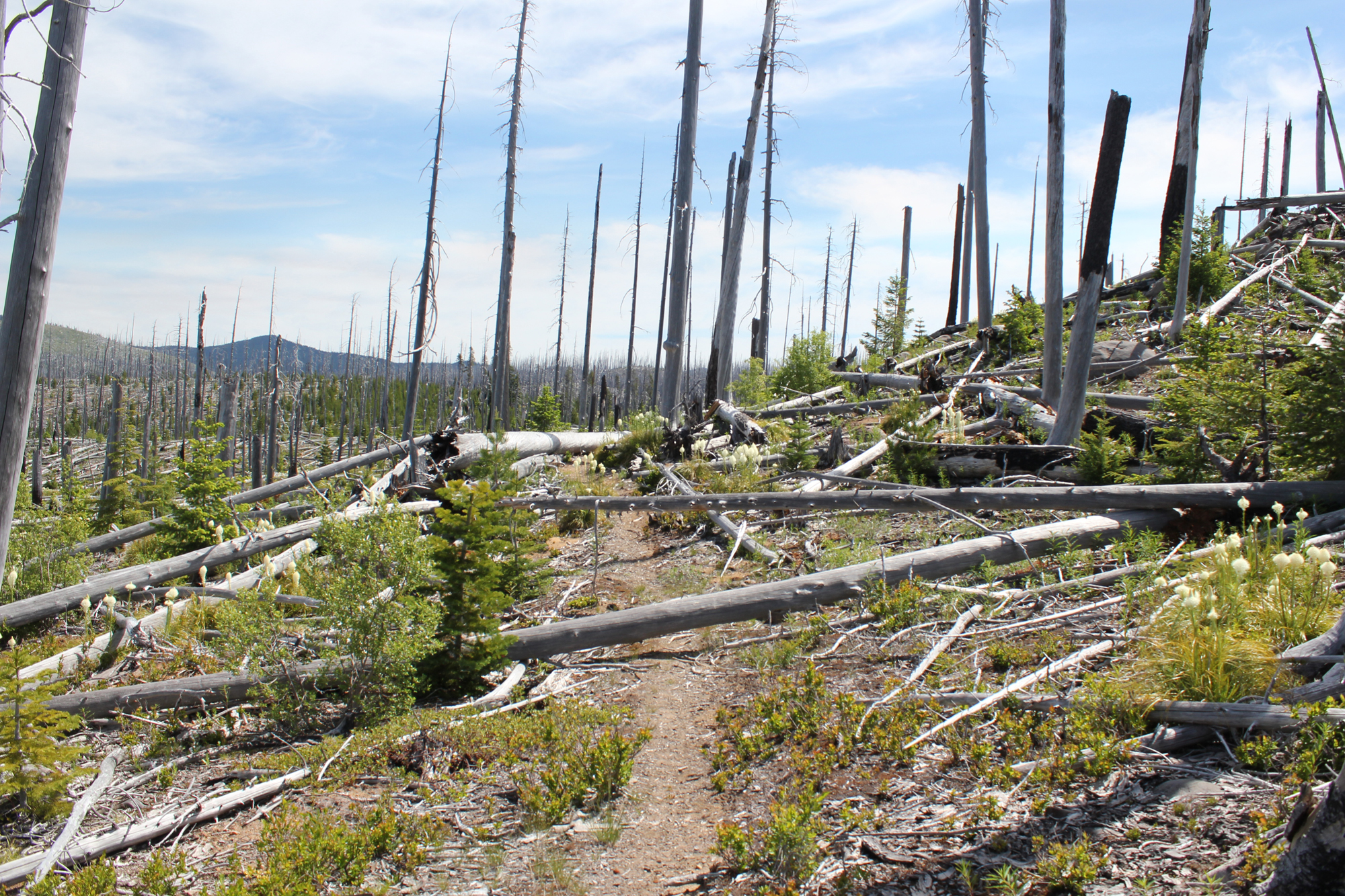
In the morning, the trail led us north, deep into the burn zone of the Waldo Lake Wilderness. The devastation from the fire continued for miles, but new growth was all around us as we hiked. Also observed were several types of bees, a wasp, woodpeckers, and a small toad.
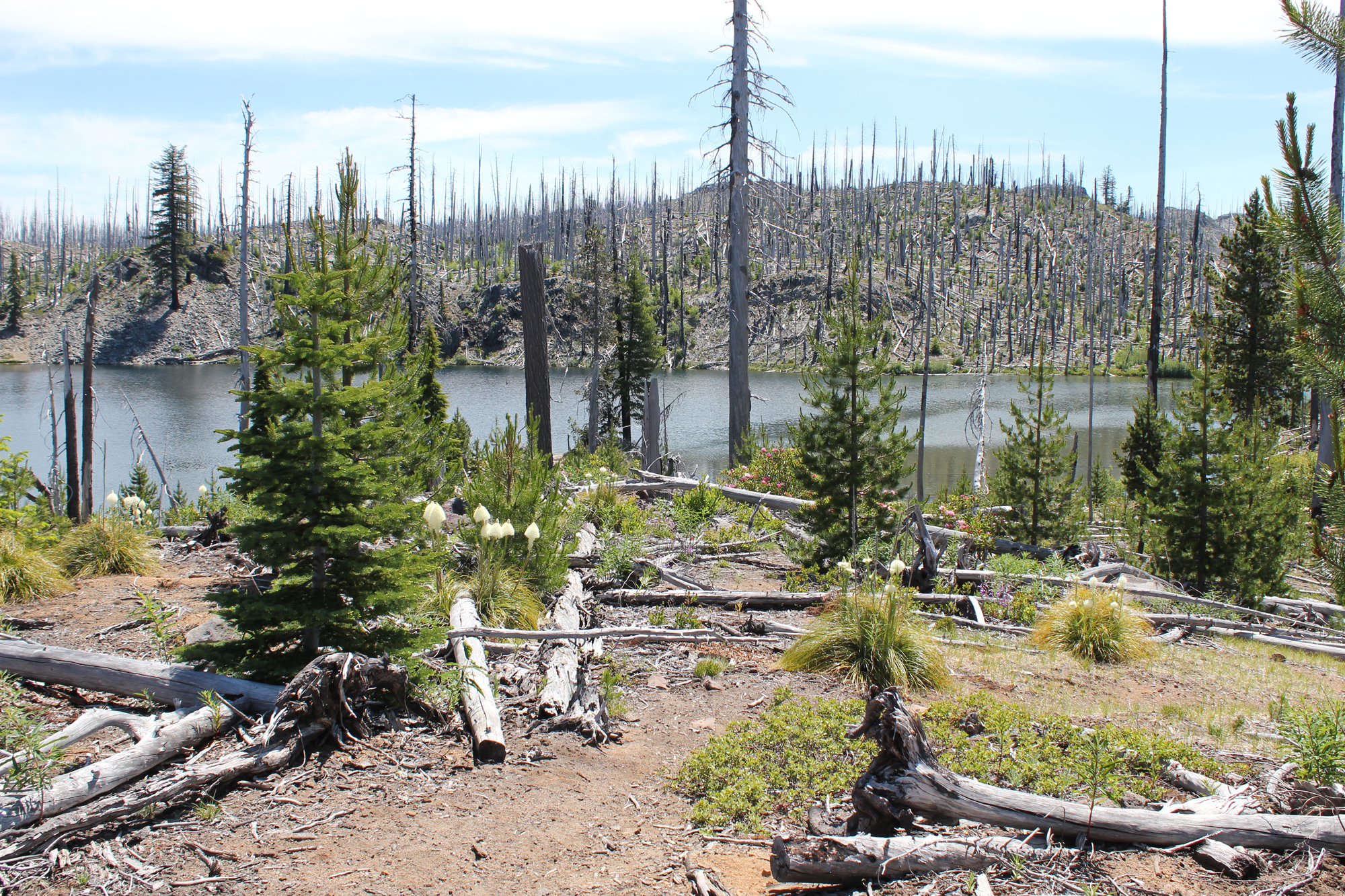
Lake Kiwa is shown in the background. The trail junction (not shown) was partially hidden by a fallen tree that also served as the post for the trail sign. The path returning us to Waldo Lake was heavy with blowdown; this two-mile trail required twice the time because of the number of downed trees we had to climb over – more scampering!
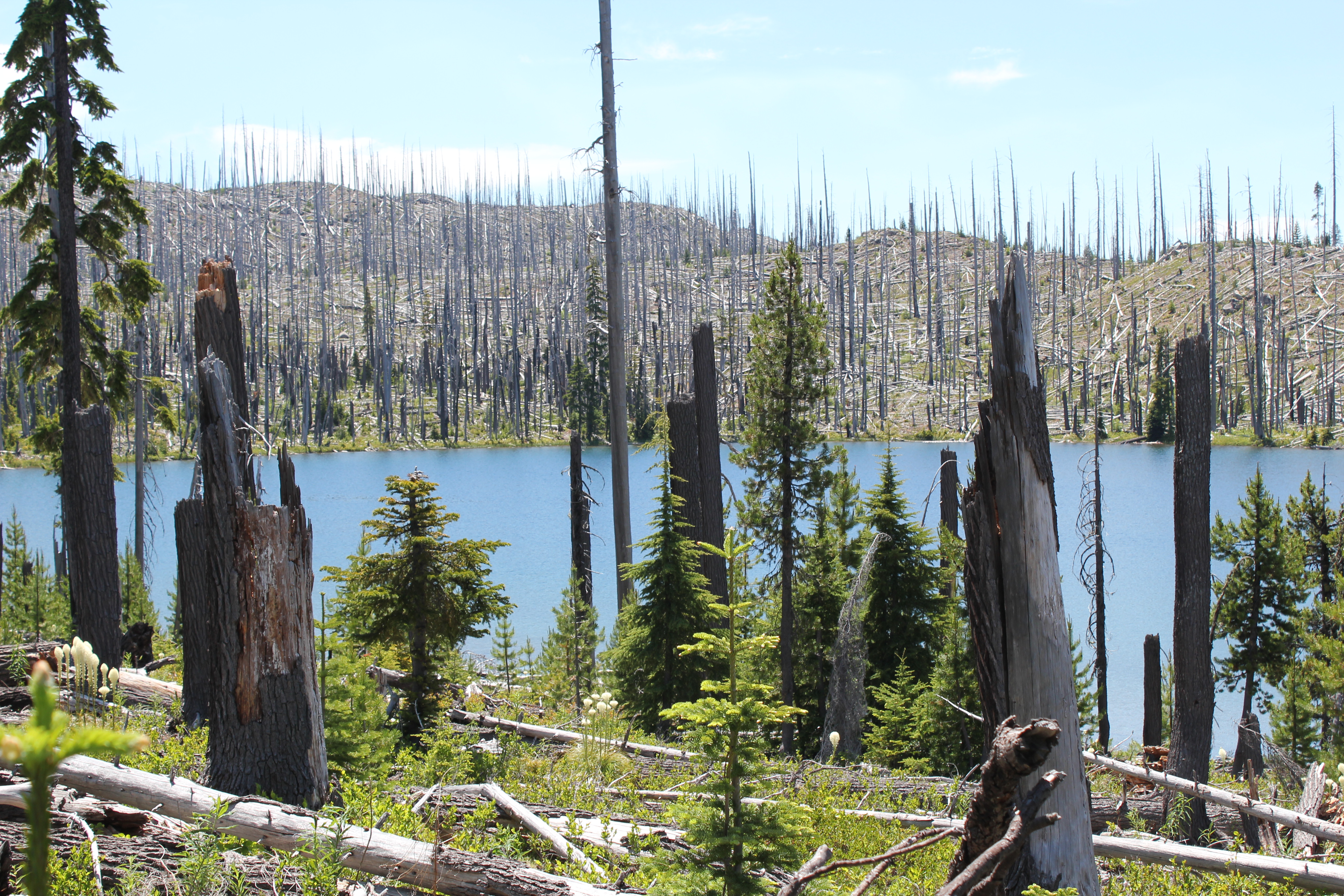
Lower Rigdon Lake offered us the visual treat of a deep blue and some much-needed shade for a short break. Near the top of the hill is Upper Ringdon Lake.
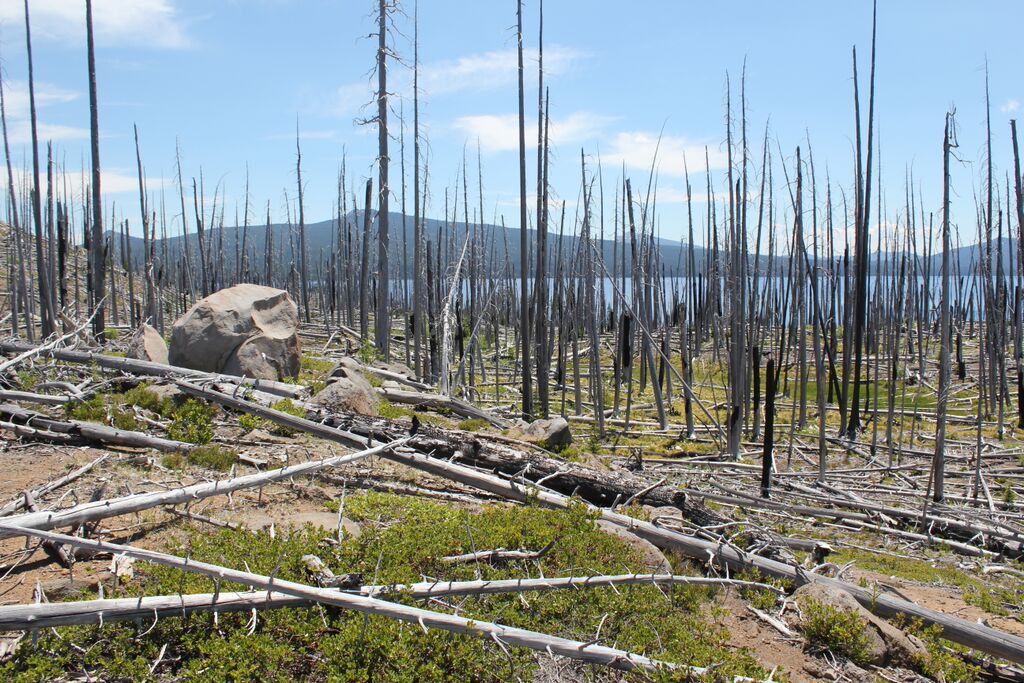
Coming down from the Ringdon Lakes; in the distance is Waldo Lake. Note shown, but interesting; there were areas on this section of trail that frequently crossed flat rocky areas where glacial scouring makes could be seen.
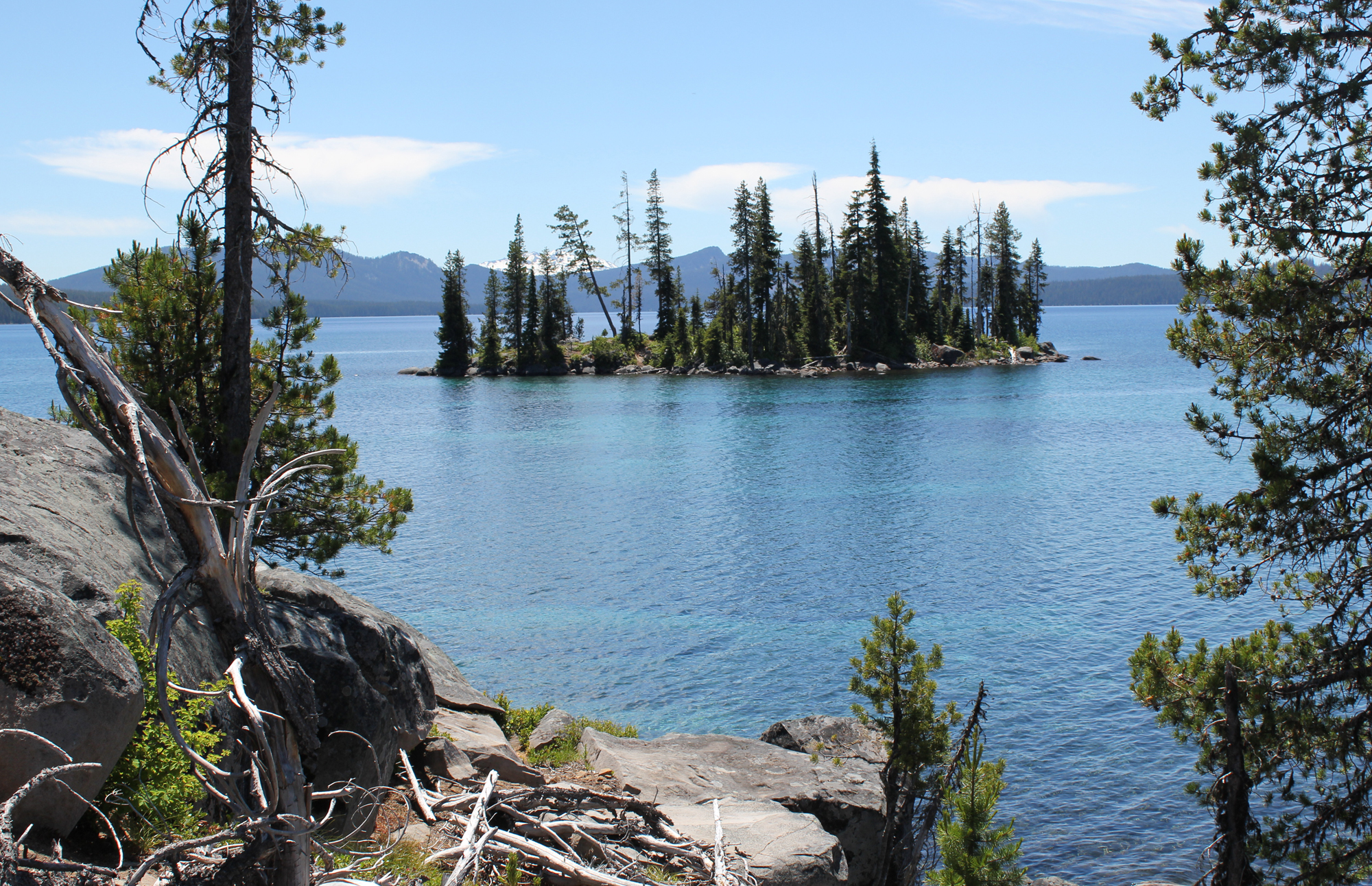
Returning to the shoreline trail we enjoy the sights of Waldo Lake’s varied and picturesque scenery.


 In the spring and summer of 2014, I enjoyed volunteering with the Nature Conservancy of Oregon (Southwest office). My role was to help grow participation in the local volunteering community. My services included upgrading their email management tool (to Constant Contact) and designing several newsletters.
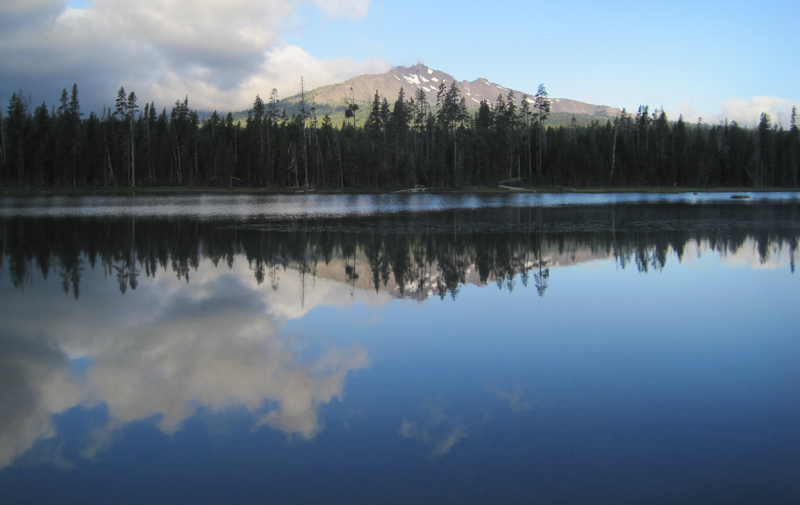 A glorious view from Diamond View Lake. The clouds at the left of the image produced some amazing lightning and thunder that afternoon.
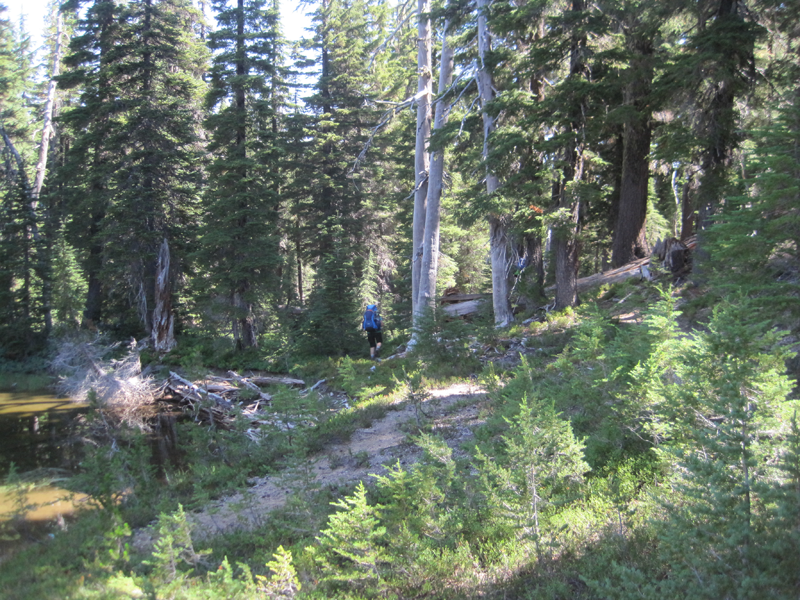 The trail got a little hard to follow at one point and we had to bushwhack.
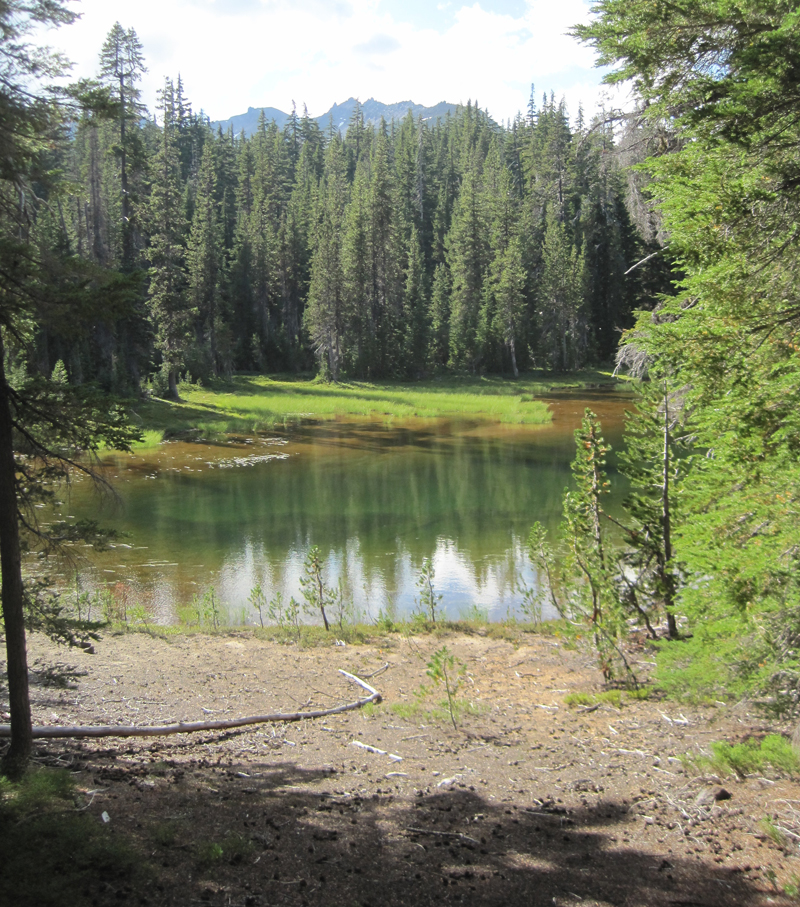 A little lake where we stopped for a rest, only to stay for the night. Water was scarce in the area and the lake provided a great location for watching wildlife and hearing even more wildlife during the nighttime.
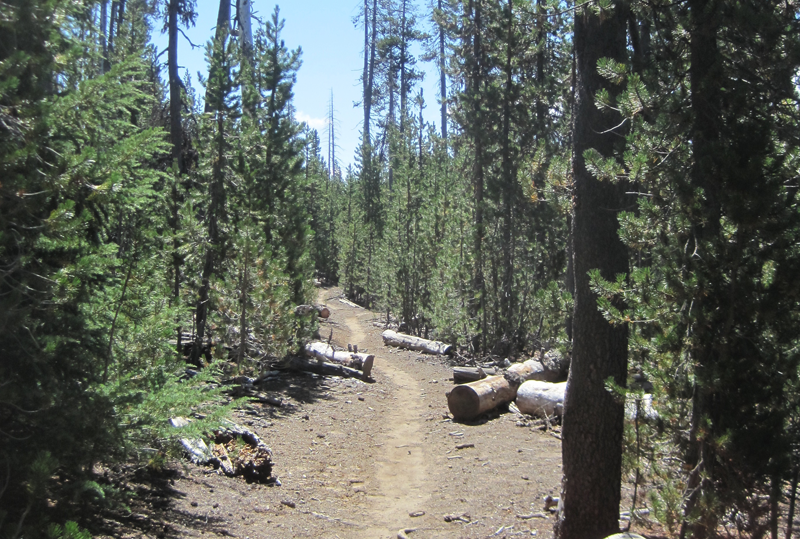 A very dusty path. This trail was well worn because of the number of PCT hikers that we met, many had been side-tracked to a lower elevation because of the lack of water on the main PCT.
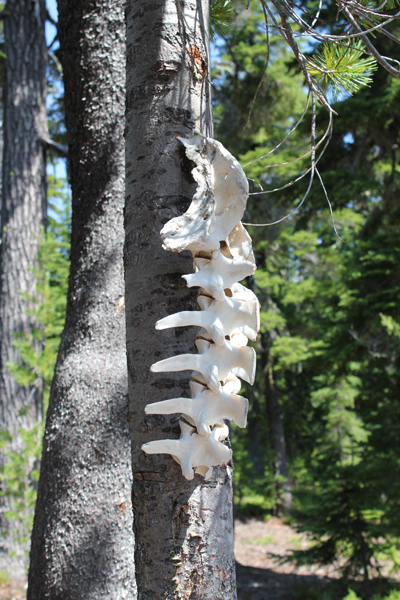 Wow! You find lots of cool things on the trail.
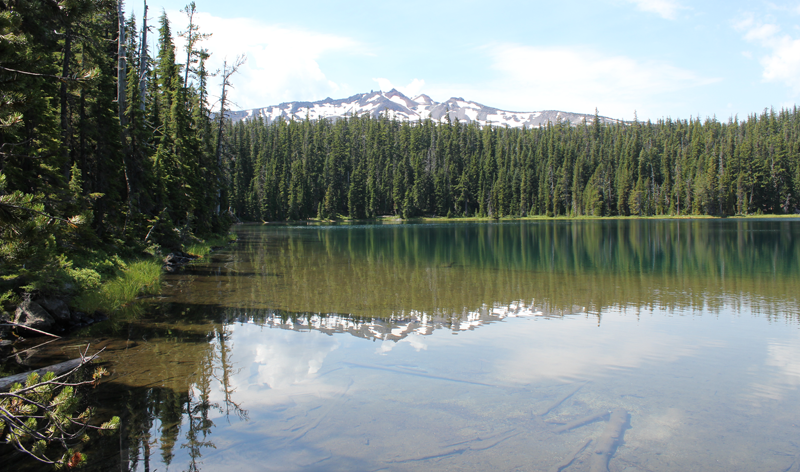 Standing at the outflow of Yoran Lake looking south to Diamond Peak. After a break, we bushwhacked about half a mile to the PCT to loopback.
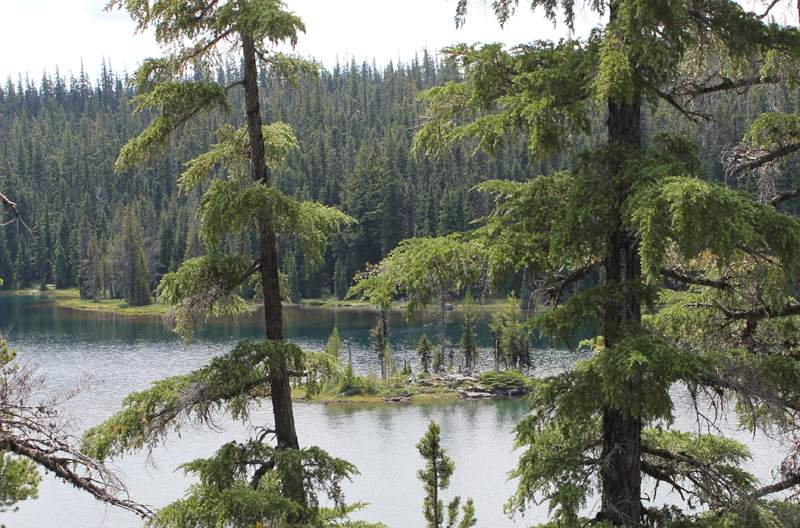 A small island on Yoran Lake.
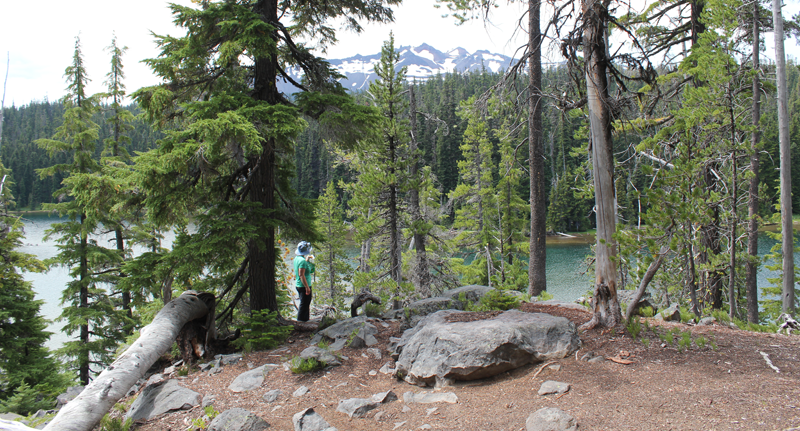 Enjoying some lunch while scouting out a great campsite.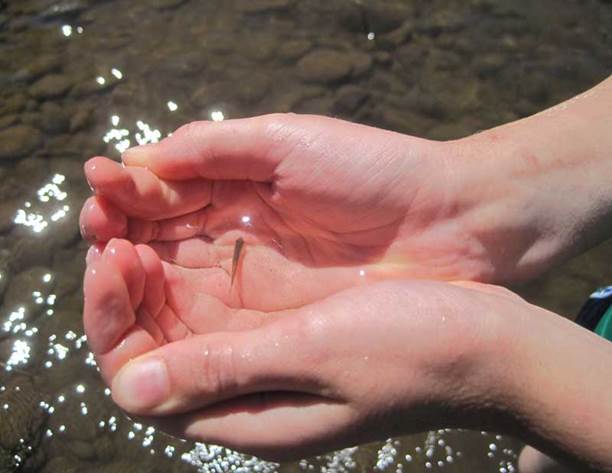
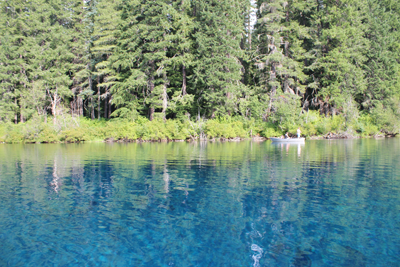 Each stroke of my paddle dips into the crystalline fluid and scoops out rounded orbs of glass-like liquid, I dip my hand into the water, the temperature is cold, somewhere around 40 degrees Fahrenheit. The lake is fed by mountain springs that course from deep within old lava flows; the water temperature stays a near constant throughout the year.
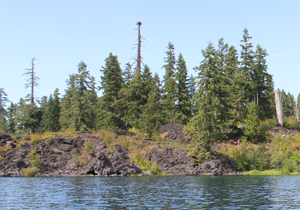 A number of Mallard ducks float next to my kayak, some are just a few feet away. One comes abreast to me and looks at me in the eye; he cocks his head as though wondering what kind of strange beast I might be. I can see his little legs moving underneath the water, churning like a miniature paddle wheel.
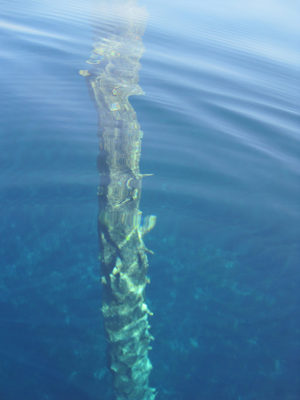 A large dark form starts to become visible in the water before my kayak. I stop paddling and the surface becomes undisturbed allowing the shape to come into focus, it is the column-like shape of one of the ancient trees. The trunk appears to be as big around as a dinner platter, and only just a couple of feet below my kayak. I try to gently tap the top of the trunk with my paddle, but I am unable to reach it. The water has played a trick on my eyes by making things appear closer than they really are. I peer down the trunk looking, fifty, sixty, possibly a hundred feet down to the bottom.